I Am Navarro College
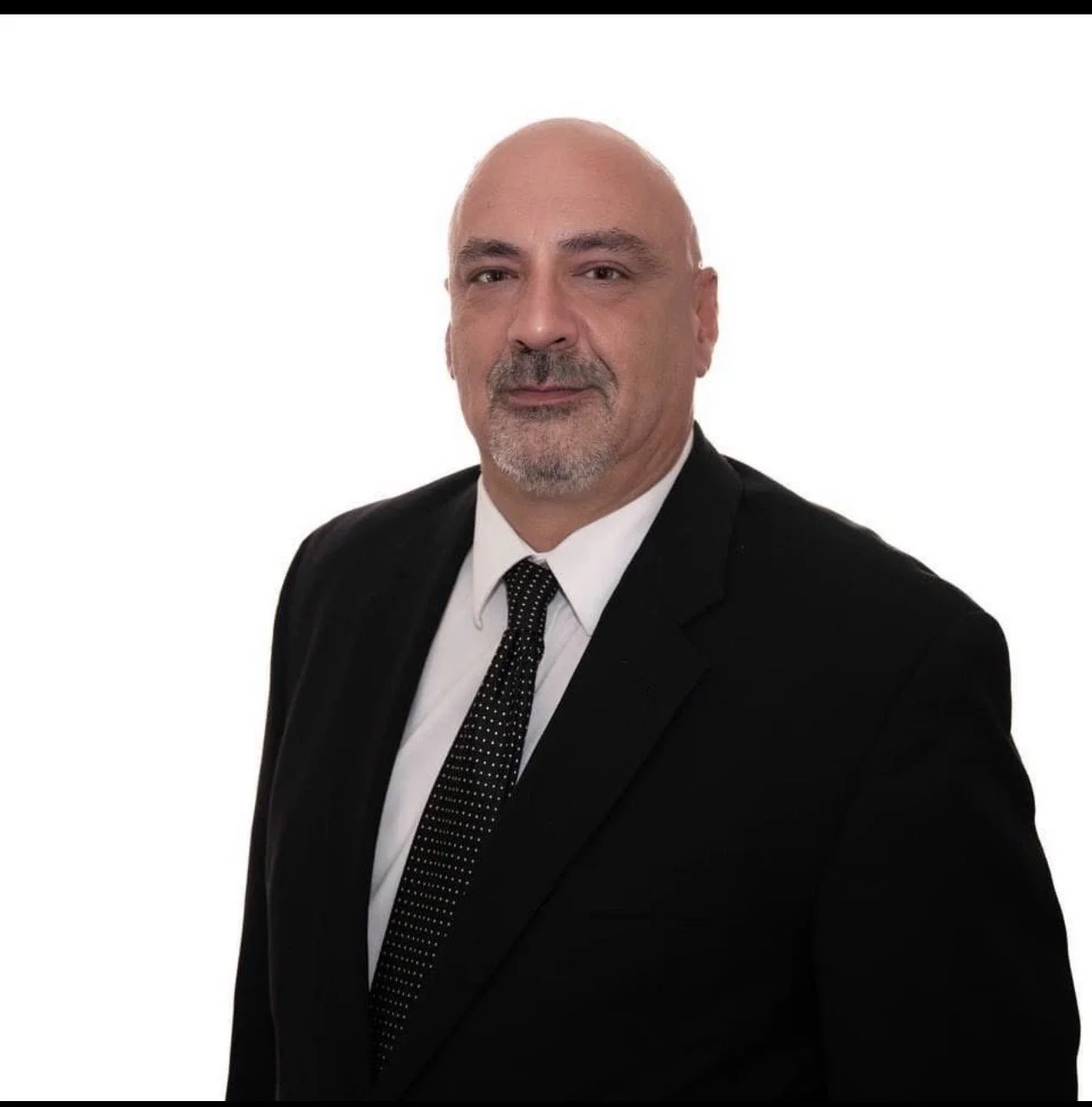
by Terry Waldrop
Transformational Leadership in a Transactional World
I am Navarro College.
I will always be Navarro College.
I haven’t gotten a paycheck from Navarro College since 1993.
And when I did, it wasn’t a whole lot.
I was thrilled to have a dorm room, a meal card and a Hall of Fame coach named Lewis Orr to work for.
That was enough. I was probably overpaid because I took away far more than I ever put in.
I was a young coach chasing my dream of college basketball.
And that dream had taken me to Corsicana, Texas, a North Central Texas town sitting between the worlds of Dallas and Waco. It wasn’t where I ultimately expected my career to take me.
It was where the next part of it began.
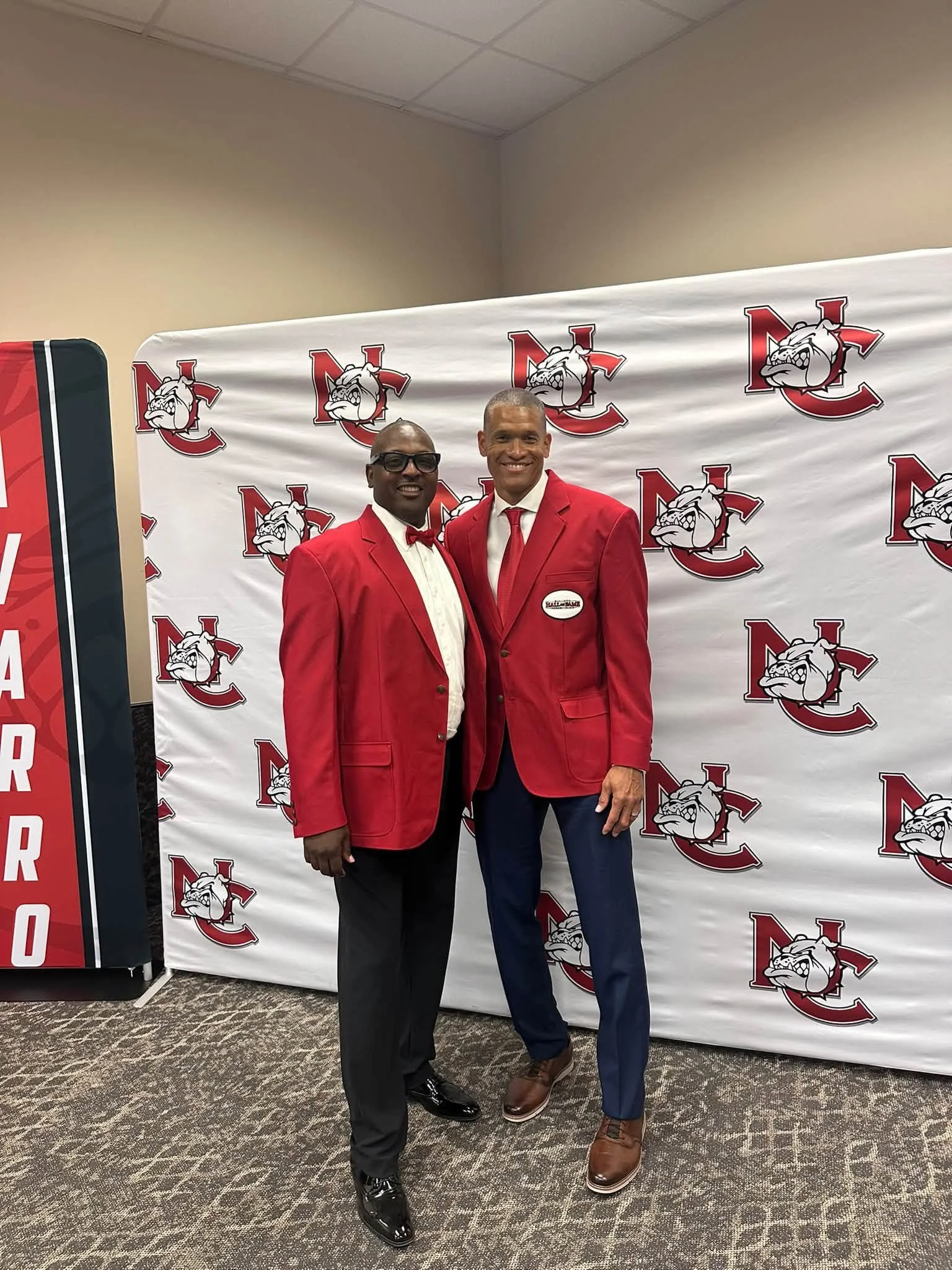
As I sat at Navarro’s Hall of Fame ceremony yesterday, it occurred to me that one of the young men sitting in that room had been doing exactly the same thing when I arrived in Corsicana in 1992.
Ruben Garces was chasing his dream too.
His journey had just been considerably longer than mine.
His began in Colón, Panama.
Ruben was 18 years old, about 6-foot-9, incredibly athletic and spoke essentially no English.
He had come thousands of miles from home when Coach Darrell Pattillo had make the trek to Panama and found him.
Ruben came because he believed basketball might take him somewhere.
Neither one of us knew exactly where basketball was going to take us.
But for both of us, Corsicana became part of the genesis.
More than three decades later, we were back.
This time Ruben wasn’t an injured 18-year-old trying to learn English.
I wasn’t a young assistant living in a dorm.
We were there because Ruben Garces was being inducted into the Navarro College Hall of Fame.
And he wasn’t alone.
Another young man I had recruited and coached, Leroy Fields, was being inducted with him.
Coach Orr was there.
Darrell Pattillo was there.
I was there.
Families were there.
Generations were there.
And somewhere during that ceremony, I realized that what I was experiencing wasn’t nostalgia.
It was transformation.
Transactional or Transformational?
We live in an increasingly transactional world.
What can you do for me?
What can I do for you?
What are you paying me?
What can this job do for my career?
What can this player do for our program?
What can this institution get from this student?
Once the transaction ends, everybody moves along.
Transformational organizations operate differently.
They certainly have transactions. Navarro paid me. I coached basketball. Players received scholarships and played games. Students earned credits and degrees.
But something happens beyond the transaction.
A transformational institution leaves something in you.
And if it does its job exceptionally well, you leave something behind in it.
That’s Navarro College.
The Tallest Cameraman in College Basketball
Ruben’s story is one of the reasons I know that.
Shortly before I arrived at Navarro, he fractured his forearm. Basketball was the reason he had come to America, and suddenly basketball had been taken away from him.
He considered going home.
Who could blame him?
Instead, he stayed.
Because I lived in the dorm and ate with our players, Ruben and I became close. He would come to my room and I would make him read aloud to me.
Over and over.
I had been a teacher before becoming a college coach, and I believed in repetition. I also knew it helped if he actually cared about what he was reading.
The 1992 Dream Team provided plenty of material.
Michael Jordan.
Magic Johnson.
Larry Bird.
The NBA.
Think about that.
An 18-year-old kid from Panama was sitting in a dorm room in Corsicana, Texas, learning English by reading about NBA players.
He dreamed of becoming one.
Eventually, he did.
Of course, there was a long road between those two points.
And plenty of air balls.
When he couldn’t play because of the broken arm, I wanted him involved with the team, so I made him our cameraman.
At 6-foot-9, Ruben Garces may have been the tallest cameraman in college basketball.
He wasn’t necessarily the best.
After the first game or two, I had to explain one important feature of the video camera to him:
It also recorded sound.
His running commentary about his teammates, coaches and officials—creative and occasionally accurate as it might have been—didn’t necessarily need to become part of the permanent Navarro basketball film library.
We still laugh about it.
But Ruben worked.
He became stronger. His game developed. He became a tremendous rebounder and shot blocker, and eventually the young man we weren’t always certain would become a great junior-college player became one of the most heavily recruited big men in America.
By then I had moved to Southeastern Louisiana University.
I wanted Ruben badly.
He ultimately chose Providence College over Southeastern.
That hurt.
Not because Ruben had done anything wrong. I loved the kid. I wanted to coach him again.
There is a tremendous difference between being disappointed in someone and being disappointed because something didn’t turn out the way you wanted.
I was never disappointed in Ruben.
He had a dream to play at the highest level: National Television, Big Conference, Big Arenas.
That dream never faltered.
He went to Providence. He played in the Big East. He became part of an incredible NCAA Tournament run losing in the Elite 8 to eventual national champion Arizona.
I couldn’t have been prouder.
He reached the NBA and built a long professional career.
That kid reading about NBA players in a Navarro dorm room had become one.
But that isn’t the best part of Ruben’s story.
He built a life.
He became a husband and father.
And for the past eight years, he has coached high school basketball in Providence, Rhode Island.
He became Coach Garces.
Earlier this year, more than three decades after we first met in Corsicana, I had dinner with Ruben and his wife, Amy, in Providence.
No recruiting.
No eligibility issues.
No scholarship.
No game to win.
Just dinner between people who have been part of one another’s lives for more than 30 years.
Then yesterday, during his Hall of Fame remarks, Ruben talked about his decision to attend Providence instead of Southeastern Louisiana. More than three decades later, he still remembered how difficult that decision had been.
And I found myself wanting him to understand something just as clearly today as I wanted him to understand it then.
It was okay.
It was always okay.
Leroy Fields
Then there is Leroy.
Leroy Fields played basketball and Football at West Monroe High School in NE Louisiana for Sidney Smith, my first boss in coaching.
I recruited Leroy to Navarro.
To play basketball.
That part still makes me smile.
Leroy was about 6-foot-4, 180 pounds, incredibly athletic and fiercely competitive. He came to Navarro a good basketball player on a team filled with exceptionally good basketball players.
Then he tried football. Ruben Garces takes credit for Leroy walking on the Football team. Maybe he deserves it.
That worked out pretty well.
Leroy became one of the premier junior-college receivers in America, went on to Oklahoma and eventually was drafted into the NFL.
But just as with Ruben, the athletic accomplishments aren’t the part of Leroy’s story that means the most to me today.
Years later, our paths crossed again in Louisiana. Leroy was working as a paraprofessional and coaching.
I stayed on him every time I saw him about finishing his degree.
I told him young people needed someone like him teaching and coaching them.
Around Christmas a couple of years ago, my phone rang.
Leroy had finished his degree.
He was becoming a teacher and coach.
And he wanted to thank me for staying on him.
My friend Bruce Brown calls moments like that coaching paychecks.
They don’t show up in your bank account.
They come when someone you coached years ago lets you know that something you said or did mattered.
I’ve received plenty of actual coaching paychecks.
That telephone call was worth more than most of them.
Yesterday, Leroy Fields entered the Navarro College Hall of Fame.
Today, he gets to influence another generation.
That’s transformation.
The Circle Comes Around
The longer you are fortunate enough to remain in coaching, the more you discover that these relationships don’t travel in straight lines.
They make circles.
My friend Scott Monarch was a fellow assistant coach with me at Navarro.
Scott is still coaching today.
A couple of years ago, more than 30 years after Scott and I helped coach Ruben Garces at Navarro, Ruben’s oldest son played for Scott at Grayson College.
Think about that.
One generation of young coaches helped coach Ruben.
Three decades later, one of those coaches was coaching Ruben’s son.
Basketball has a funny way of doing that.
Maybe life does too.
The people we coach become coaches.
Their children become players.
Young assistants become veteran coaches.
Relationships that once seemed tied to one team, one season and one gym somehow survive long after anyone remembers the final score.
The circle comes around.
A Coaching Tree I Couldn’t See Yet
When I worked for Lewis Orr, I didn’t know I was developing a leadership philosophy.
I thought I was learning how to coach basketball.
Coach Orr gave his assistants responsibility. He told us what needed to be accomplished, established the parameters and expected us to figure out how to accomplish it.
Sometimes we succeeded.
Sometimes we failed.
Either way, we learned.
Those lessons traveled with me when I left Corsicana.
Eventually, I became a head coach myself.
Young coaches worked for me just as I had once worked for Coach Orr.
Quite a few young men who either played for me or worked for me eventually joined the coaching profession themselves.
Two have risen to become Division I head coaches.
Jimmie Williams is the head coach at Campbell University.
Talvin Hester is the head coach at Louisiana Tech University.
The connection continued at Texas Wesleyan.
Brennen Shingleton played for me, became my longtime assistant and eventually became the head coach there.
The current Texas Wesleyan head coach, Brian Wanamaker, also played for me.
Then look back at Navarro.
Leroy is coaching.
Ruben is coaching.
Scott Monarch is still coaching.
Ruben’s son eventually played for Scott.
Try drawing all of that on an organizational chart.
You can’t.
Because transformational leadership doesn’t operate through organizational charts.
It operates through people.
It moves from coach to player.
From player to coach.
From assistant to head coach.
From father to son.
From one generation to another.
At 30, you’re trying to win the next game, sign the next player and get the next job.
Stay around long enough and you begin measuring things differently.
You start looking at what happened to the people.
Then you start looking at what happened to the people they influenced.
Where does Lewis Orr’s influence end?
Where does Darrell Pattillo’s end?
Where does Scott Monarch’s end?
Where does mine end?
Where will Leroy’s and Ruben’s end?
We’ll never know.
Transformation has no expiration date.
And much of the genesis of my own leadership tree was Navarro College.
Leadership From the Top
There was another reason yesterday affected me.
I listened to Navarro College President Dr. Kenneth Fegan give the opening remarks.
Then I listened to Athletic Director Michael Landers.
And I kept hearing the same themes.
People.
Excellence.
Expectations.
Transformation.
Dr. Fegan talked about what an honor it was to be inducted into the Navarro College Hall of Fame.
He couldn’t have been more right.
I give Michael Landers tremendous credit for putting the event together. But what struck me wasn’t simply the quality of the ceremony.
It was the consistency of the message.
I’ve been in leadership positions long enough to recognize the difference between an organization that has a slogan and one that has a culture.
When the president of an institution communicates a set of values and the athletic director communicates those same values—and then you can actually see those values demonstrated by the institution—leadership is being disseminated from the top throughout the organization.
Yesterday, you could see it.
Eight Different Stories
There were eight Hall of Fame inductees.
Their stories were remarkably different.
There was a former Major League Baseball player who was an absolutely hilarious storyteller.
There was a man who had devoted much of his life to golf. When he became emotional, he didn’t focus simply on what he had accomplished at Navarro. He talked about what his time at Navarro had allowed him to do afterward—coaching, teaching and reaching other people.
There was an accomplished soccer player.
There was a volleyball player who had was a national MVP and national champion.
There was a man who had devoted countless hours to broadcasting Navarro football, basketball and baseball and was now seeing his own contribution recognized.
There was a man who had passed away. A Football player. His family was there representing him. You could see their pride.
There were Leroy and Ruben.
Different sports.
Different backgrounds.
Different families.
Different beliefs.
Different ideas.
Different journeys.
Yet they shared something.
Navarro College saw them.
That struck me.
Navarro College sees you for who you are.
In today’s world, that feels increasingly rare.
The institution wasn’t asking those eight people to become the same person.
It was honoring eight very different people whose lives intersected with Navarro and who carried something from that experience into the rest of their lives.
That may be one of the purest examples of transformational leadership I can imagine.
What I’m Taking With Me
The timing of all of this is particularly meaningful to me.
I’ve recently renewed another chapter of my professional life as a healthcare administrator.
A psychiatric hospital in Louisiana doesn’t look much like a junior college basketball program in Corsicana, Texas.
But leadership is leadership.
Healthcare can become incredibly transactional.
A nurse works a shift.
A technician completes an assignment.
A therapist conducts a group.
A physician writes an order.
A department head submits a report.
A patient is admitted, treated and discharged.
Then another patient arrives.
Those processes matter.
Standards matter.
Accountability matters.
In healthcare, getting those processes right can affect safety and lives.
But completing transactions isn’t leadership.
Transactional leadership manages what people do. Transformational leadership helps shape what people become.
And transformational leadership does not mean lowering expectations.
Navarro reminded me of exactly the opposite.
A commitment to people and a commitment to excellence aren’t competing ideas.
You can care deeply about people and demand excellence from them.
You can hold someone accountable while helping that person grow.
You can insist upon standards without treating people as interchangeable parts.
Set the standard.
Hold people accountable.
Teach them how to reach it.
Give them opportunities to grow.
Recognize them when they succeed.
Remember their contribution when they move on.
Build an organization they remain proud to have been associated with long after the paycheck stops.
That’s leadership.
And that is something I intend to carry with me into this newest challenge.
Embracing the Past to Surge Into the Future
Leadership conversations tend to focus on the future.
Vision.
Strategic plans.
Innovation.
Growth.
All of those things matter.
But organizations make a mistake when they become so focused on where they’re going that they forget the people who helped them get there.
The best institutions don’t live in their past.
They embrace their past and use it to surge into their future.
They tell the stories.
They bring people home.
They connect generations.
They allow today’s students and athletes to understand that other people came before them and that they are now responsible for carrying something forward for the people who will come next.
That isn’t nostalgia.
That’s culture.
And culture may be one of the most powerful leadership tools an institution possesses.
Yesterday, Navarro College reminded me of the power of that culture.
I haven’t received a paycheck from Navarro since 1993.
I haven’t coached a game there in more than three decades.
But what Navarro gave me never appeared on a paycheck anyway.
It gave me an opportunity.
It gave me Coach Lewis Orr.
It gave me fellow coaches like Darrell Pattillo and Scott Monarch and so many more people there.
It gave me young men like Leroy Fields and Ruben Garces.
It gave me lessons that traveled with me to Southeastern Louisiana, Texas Wesleyan and everywhere else my career has taken me.
It gave me lessons I have passed on to my children and now grandchildren.
Those lessons traveled farther still through players and assistant coaches who became coaches themselves.
And now, at 62 years old, I’m carrying some of those same lessons into an entirely different kind of leadership challenge.
Yesterday reminded me where some of them began.
Corsicana, Texas.
Navarro College.
I will always be grateful that Navarro allowed me to play a small part in an incredible legacy and history.
I arrived there as a young coach chasing a dream.
I left with something I wouldn’t completely understand for another 30 years.
Maybe that is the difference between something transactional and something transformational.
The transaction ended decades ago.
The transformation never did.
I am Navarro College.
I will always be Navarro College.