The Floor Still Had to Be Swept
Lessons from Coach Orr | Installment Three
by Terry Waldrop
I had a perfectly good reason for being late. Coach Lewis Orr taught me why the reason did not matter.
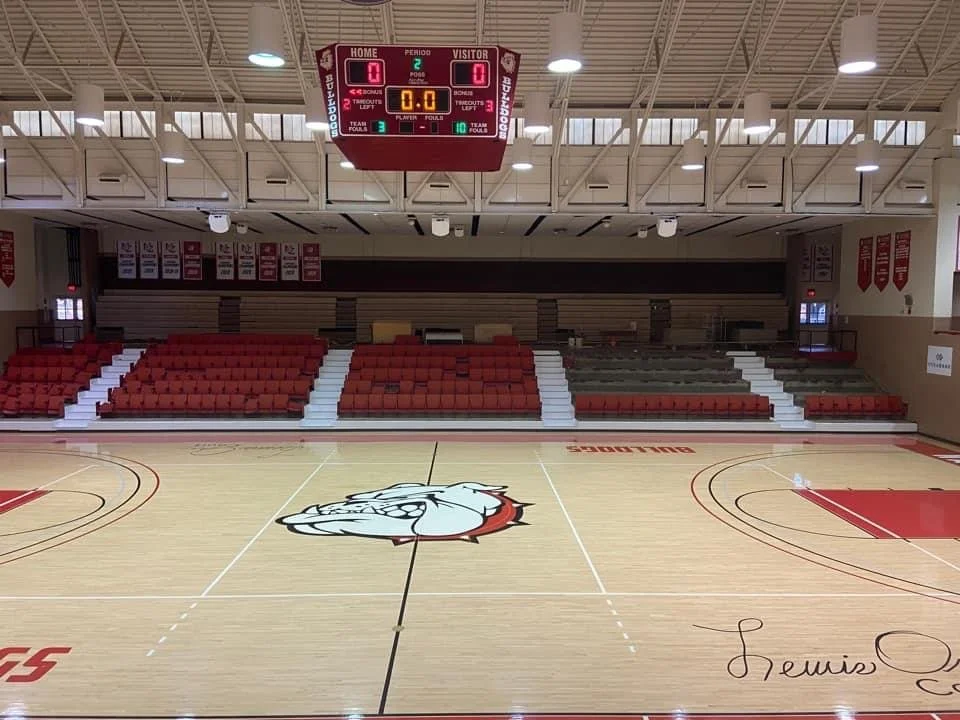
The court at Navarro College’s Special Events Center, where Coach Lewis Orr taught me that trust with the big things begins with handling the little things.
I spent only a couple of years at Navarro College, but Coach Lewis Orr’s lessons have stayed with me for more than thirty years.
Coach Orr demanded your best. He challenged his assistants to think like head coaches while still performing the duties of assistant coaches. He wanted us to anticipate problems, adapt when circumstances changed and be prepared before trouble arrived.
Before he could teach me to think like a head coach, however, he first had to teach me to handle the little things that were the responsibilities of assistant coaches—or at least good ones.
During the 1992–93 season, my first year at Navarro, one of my assigned duties was about as basic as it gets: sweep the gym floor before practice.
The person whose place I had taken at the bottom of Coach Orr’s staff had moved on to another school. His name was Buzz Williams—now the head coach at the University of Maryland. Sweeping the floor was not punishment or busywork. It was simply where you started in Coach Orr’s program. Buzz had done it before me, and now it belonged to me. Buzz has a very similar floor sweeping story.
Every day at 2:15 p.m., I was supposed to take the standard-issue gym mop and run it across the court at the Special Events Center. It took five or six minutes. Practice began at 2:30.
It was a simple job, but it was not meaningless. Dirt and dust on a basketball court are safety hazards. A player can lose his footing, pull a muscle or injure a knee. From the New York Knicks to a middle-school team, the standard is the same.
Before practice begins, the floor needs to be swept.
At Navarro, that responsibility belonged to me.
On this particular day, I was meeting with a teacher on behalf of one of our starters. The young man had missed class, and the two previous times he attended, he had arrived about ten minutes late. The teacher was justifiably angry.
What I expected to be a short conversation became something close to a therapy session. I listened, acknowledged the problem and made the best case I could for giving the player another opportunity to pass the course.
Helping young men develop academic discipline was just one part of junior-college coaching. The meeting mattered.
It also ran longer than I anticipated.
I arrived at the Special Events Center at approximately 2:25—ten minutes after my assigned mop time and only five minutes before practice. I was sprinting toward the arena while trying to convince myself that maybe nobody had noticed.
My plan was to enter at the second-floor level, hurry down through the stands, grab the mop and finish the floor before anyone realized I was late.
It was a great plan right up until I looked down at the court.
There was Coach Lewis Orr, wearing his patented red Navarro warm-up suit, about halfway through sweeping the floor.
I felt as if somebody had kicked me in the—well, you get the idea.
I rushed onto the court and asked him to give me the mop. This was my assignment. I would finish it.
Coach Orr did not raise his voice or embarrass me in front of the players, many of whom were just wandering in and getting some shots up before practice.
He simply said, “Coach, I got it.”
I started to explain. I had been meeting with a teacher. I was trying to help one of our starters pass a class. This was important.
Then Coach Orr gave me that glance. Those who knew him know exactly which one I mean. The patented dad look. Unmistakable. Wilting. Final.
My voice trailed off.
That was a lonely practice. I became a statue for the next two hours. At that point, I don’t think even the birds would have landed on me. I couldn’t have blamed them.
The next day, I arrived on time. Coach Orr had arrived even earlier and was already sweeping the floor.
The following day, I arrived an hour early. Either Coach Orr or a student assistant working under his direction had already taken care of it.
This continued for a week. It did not matter when I arrived. The floor was no longer my responsibility.
During that week, Coach Orr said very little to me and gave me no assignments during practice. It was almost as if I did not exist.
Finally, I worked up enough courage to ask for a meeting.
We went to the Cici’s Pizza buffet on 7th in Corsicana, home to many high-level conversations about Navarro basketball over the years. As soon as we sat down, I began presenting my case. Harvey Specter from Suits could not have made a better argument—well, at least initially.
The player had not been attending class. The teacher was angry. The player was in danger of failing the class. The meeting had run longer than expected.
I had a good reason. I had a really good reason.
The longer I explained it, however, the weaker that good reason began to sound.
Coach Orr listened patiently. Then he looked at me.
“Coach, I know why you were late that day. I know what you were working on, and it was important.”
That stopped me cold.
He had known the entire time.
This was never about whether the meeting mattered. It was about whether I could be counted on to make sure every assigned job got done—even the small ones.
Then Coach Orr asked the question I have carried with me for more than thirty years:
“Coach, how can I trust you with the big things if I can’t trust you with the little ones?”
That question landed like a nuke.
I had not been lazy. I had not been wasting time. I had been helping a player with a legitimate problem.
But the floor still had to be swept.
I could have met with the teacher earlier. I could have recognized the attendance problem before it became a crisis. I could have arranged for someone else to sweep the floor or communicated with Coach Orr before I was late.
I had options.
What I did not have was an excuse.
Good intentions do not complete assignments. Good reasons do not remove hazards. Explanations offered after the fact do not change what was left undone.
Little things rarely remain little when they are ignored. A dusty floor becomes a player slipping. A missed class becomes a failed course. One overlooked detail becomes a larger problem that somebody else must solve.
That is why the little things matter.
When we finished lunch, I offered no more explanations. I simply told Coach Orr the floor would never again be neglected.
For the remainder of my time at Navarro, the floor was swept on time, every time, without exception. More importantly, the lesson changed how I worked. I learned to anticipate problems instead of explaining them afterward.
I have shared Coach Orr’s lesson with my players, staffs, children and now grandchildren. They may get tired of hearing it, but some lessons are too important to retire.
Commitment. Responsibility. Accountability. Anticipation. Adjustment.
There are no excuses.
The floor still has to be swept.